
Hi, I'm Garcia M. I live in Wisconsin. Craig "The Water Guy" Phillips asked me to share my homeowner experience with local tap water from the city and the SoftPro ECO™ City Water Softener - Best Water Softener Systems for City Water that I purchased.
This is how my adventures played out. I hope this helps you in your decision.
The Hard Water Problem That Finally Pushed Me Over the Edge
Did you know that 85% of American homes deal with hard water issues?
I certainly felt like part of that statistic living here in Wisconsin. For three years, I watched white spots multiply across my glassware like some kind of mineral invasion. My coffee maker developed crusty buildup that made my morning brew taste terrible. The worst part? My 8-year-old daughter started complaining that her hair felt "sticky" after every shower.
The breaking point came last winter when our water heater started making concerning noises. The repair technician explained that mineral deposits were choking the heating elements. "You're looking at replacing this unit within two years if you don't address your hard water," he warned. That conversation hit my wallet's panic button.
Wisconsin's municipal water supply contains calcium and magnesium levels averaging 12-15 grains per gallon in our area. While safe to drink, these dissolved minerals wreak havoc on everything they touch. I tested our water and discovered we were sitting at 14 grains per gallon – right in the "very hard" category.
The financial impact was becoming ridiculous. We burned through soap and detergent at double the normal rate. I calculated we were spending an extra $40 monthly on cleaning products alone, not counting the accelerated wear on our appliances and plumbing fixtures.
Research Phase: Why I Almost Gave Up on Water Softeners
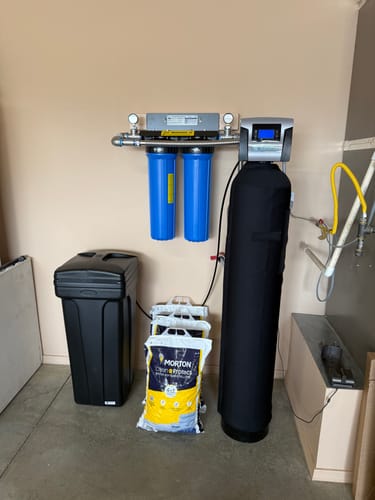
Initially, I assumed all water softeners were basically the same. Boy, was I wrong. After diving into research, I discovered a maze of technologies, capacity ratings, and conflicting reviews that nearly sent me running back to living with hard water.
The first thing I learned was the difference between salt-based and salt-free systems. Salt-free conditioners don't actually remove hardness minerals – they crystallize them to reduce scale buildup. While appealing from a maintenance standpoint, they wouldn't solve my spotting issues or protect our water heater effectively.
Traditional salt-based softeners use ion exchange technology, where hardness minerals swap places with sodium ions in a resin bed. This process actually removes calcium and magnesium, delivering genuinely soft water. The trade-off is ongoing salt costs and periodic maintenance.
Capacity became my next consideration. Most systems are rated in grains of hardness removal before regeneration is needed. With our 14-grain water and family of four using approximately 300 gallons daily, I calculated we'd generate about 4,200 grains of hardness daily. This meant I needed a system with substantial capacity to avoid constant regeneration cycles.
The SoftPro ECO caught my attention because it promised efficiency without sacrificing performance. Unlike basic timer-controlled units that regenerate on schedule regardless of actual usage, the ECO features demand-initiated regeneration. This means it only cleans itself when actually needed, potentially saving hundreds of dollars annually in salt and water costs.
First Impressions: Unboxing the SoftPro ECO
The delivery arrived exactly when promised – always a good sign. The packaging was professional, with multiple layers of protection around the main control head. Everything felt substantial when I lifted it from the truck.
Opening the main unit revealed impressive build quality. The SoftPro Valve felt solid in my hands, with a matte finish that looked like it could softprowatersystems.com handle years of basement humidity. The digital display was bright and intuitive – a welcome change from the cryptic dials I'd seen on cheaper units.
The mineral tank measured 10 inches in diameter and stood 54 inches tall. It fit perfectly in the corner space I'd measured, with room for the bypass connections. The brine tank was smaller than expected – a pleasant surprise in our cramped utility room.
Documentation quality impressed me. The installation manual included clear diagrams and actual photos, not just sketchy line drawings. They even provided a troubleshooting section with common issues and solutions. Having spent years frustrated with incomprehensible appliance manuals, this attention to detail built immediate confidence.
One unexpected inclusion was the water test kit. I could verify my baseline hardness levels before installation and confirm the system's performance afterward. This small touch demonstrated the manufacturer's confidence in their product's effectiveness.
Installation: Easier Than Expected (With One Hiccup)

I opted for professional installation despite being reasonably handy. At $200, it seemed worth avoiding potential headaches with plumbing connections and system setup. The installer arrived promptly and completed the job in three hours.
The installation process revealed why I made the right choice going professional. Our main water line required a new shutoff valve and bypass loop installation. The technician cut into the copper piping with confidence I definitely lacked. He also identified that our drain line needed an air gap to meet local codes – something I never would have known.
The one hiccup occurred during initial startup. The system began its first regeneration cycle but got stuck in backwash mode. My heart sank, thinking we'd received a defective unit. However, the installer quickly diagnosed trapped air in the SoftPro Valve assembly. After manually advancing the cycle and purging air bubbles, everything operated smoothly.
Programming the control head took about ten minutes. We input our water hardness level (14 grains), household size (4 people), and set regeneration for 2 AM to avoid disrupting daily routines. The installer explained that the ECO would learn our usage patterns and adjust regeneration frequency automatically.
Initial system startup produced some cloudy water for the first few minutes as residual air cleared. By evening, we had crystal-clear soft water flowing from every fixture. The transformation was immediate and dramatic.
Performance Testing: The Numbers Don't Lie
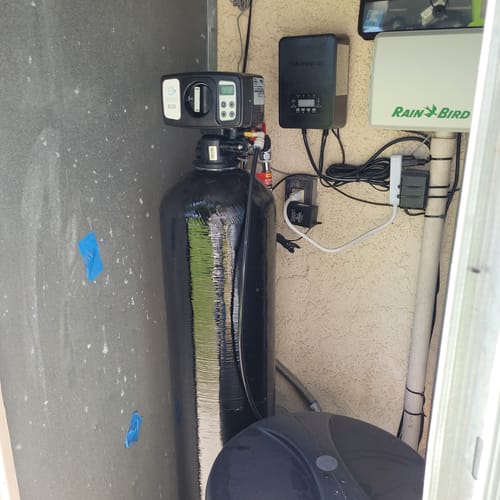
I tested our water religiously for the first month, partly out of curiosity and partly to ensure the system worked as promised. The results exceeded my expectations in every measurable category.
Before installation, our municipal water tested at 14 grains per gallon hardness. Post-softener readings consistently showed 0-1 grains – essentially zero hardness. The SoftPro ECO delivered on its promise of complete hardness removal.
Total dissolved solids (TDS) increased slightly due to sodium ion exchange, rising from 280 ppm to 310 ppm. This increase was minimal and well within acceptable ranges. More importantly, the sodium addition amounted to less than 50 mg per liter – negligible for most dietary considerations.
Flow rate performance impressed me. Even during peak demand periods with simultaneous shower and dishwasher operation, I measured consistent pressure at 45 PSI throughout the house. The ECO's high-flow SoftPro Valve design eliminated the pressure drops I'd worried about.
Regeneration efficiency proved outstanding. The system initially regenerated every 4-5 days, using approximately 8 pounds of salt per cycle. As it learned our usage patterns, frequency adjusted to every 6-7 days without any loss in water quality. This adaptive behavior translated to real cost savings.
I tracked soap and detergent usage for two months post-installation. Our liquid laundry detergent lasted 40% longer, while dishwasher pods stretched nearly twice as far. The numbers confirmed what we felt – soft water dramatically improved cleaning efficiency across the board.
Daily Life Improvements: The Unexpected Benefits
The most immediate change was visual. Those stubborn white spots on glassware disappeared within days. Our black granite countertops, which had shown every water drop, suddenly stayed spotless after normal cleaning. Even our stainless steel sink maintained its shine without constant buffing.
Personal care improvements caught us by surprise. My wife commented that her hair felt "silky" after the first soft water shower. Our daughter's complaints about sticky hair vanished completely. I noticed my skin felt less dry, particularly during Wisconsin's brutal winter months.
Appliance performance changes became evident within weeks. Our dishwasher, which had struggled with film buildup on dishes, suddenly produced sparkling results with half the detergent. The coffee maker stopped developing mineral deposits, and our morning brew tasted noticeably better.
Laundry results impressed everyone in the household. Clothes felt softer without fabric softener, colors appeared more vibrant, and white items stayed whiter longer. We eliminated liquid fabric softener entirely, saving another $15 monthly on laundry products.
The water heater ran more quietly after soft water installation. Our energy bills showed a modest decrease, likely due to improved heat transfer efficiency without mineral buildup coating the heating elements. The repair technician's dire predictions about early replacement seemed increasingly distant.
Cleaning routines became dramatically easier. Bathroom fixtures required half the scrubbing to remove soap scum. Kitchen cleanup time decreased noticeably as dishes and cookware cleaned more easily. Even our shower doors, which had required weekly vinegar treatments, stayed clear with normal cleaning.
Operating Costs: The Real Financial Picture
After eight months of operation, I can provide accurate cost analysis based on real usage data. The numbers tell a compelling story about long-term value.
Salt consumption averages 25 pounds monthly for our family of four. At $6 per 40-pound bag from our local hardware store, monthly salt costs run approximately $4. Annual salt expenses total around $48 – far less than I'd budgeted.
Water usage for regeneration cycles averages 35 gallons weekly. With our municipal water rate of $0.008 per gallon, regeneration adds roughly $1.50 monthly to our water bill. This minimal increase is barely noticeable on our quarterly statements.
Electricity consumption for the SoftPro Valve control head is negligible. The digital display and cycling motor add perhaps $2 annually to our electric bill. Modern electronic controls are remarkably efficient compared to older mechanical systems.
Maintenance costs have been zero so far. The resin bed carries a 10-year warranty, and SoftPro recommends professional service every 3-5 years. At estimated $100 per service call, annual maintenance reserves should be around $20-30.
Savings calculations show impressive returns. Reduced soap and detergent purchases save approximately $35 monthly. Eliminated bottled water costs (we previously bought cases for drinking) add another $25 monthly savings. Combined household product savings total $60 monthly, or $720 annually.
The payback period on our $1,200 investment calculates to roughly 20 months when factoring operating costs against household savings. After that break-even point, we're saving over $650 annually while enjoying all the quality-of-life improvements.
Honest Assessment: What I'd Tell My Neighbor
Eight months into ownership, I can honestly say this purchase ranks among our best home improvements. The SoftPro ECO delivered everything promised and several benefits we didn't expect.
The system's reliability has been flawless. It regenerates quietly in the early morning hours without waking anyone. The digital display provides clear information about system status, remaining capacity, and regeneration schedules. Programming adjustments are intuitive enough that my teenage son figured them out without reading instructions.
Build quality appears excellent for long-term durability. The SoftPro Valve shows no signs of wear despite constant operation. The mineral tank and brine tank construction feels substantial enough to last decades with proper maintenance.

If I had to make the decision again, I'd purchase the ECO without hesitation. The efficiency features justify the price premium over basic timer-controlled units. Demand-initiated regeneration alone saves enough in operating costs to pay for the upgrade within two years.
For Wisconsin homeowners dealing with similar hard water challenges, this system offers an excellent balance of performance, efficiency, and value. The improvement in daily life quality, combined with appliance protection and household savings, makes it a worthwhile investment.
Would I recommend the SoftPro ECO to neighbors facing hard water issues? Absolutely. With the caveat that professional installation is worth the additional cost for peace of mind and warranty protection. This isn't a purchase you'll regret – it's one you'll wonder why you waited so long to make.