
Hi, I'm Orchid Y. I live in Georgia. Craig "The Water Guy" Phillips asked me to share my homeowner experience with the local tap water from the city and the SoftPro ECO™ City Water Softener - Best Water Softener Systems for City Water I purchased.
This is how my adventures played out. I hope this helps you in your decision.
Did you know that over 85% of American homes deal with hard water issues that silently damage appliances and create daily frustrations?
Six months ago, I was one of those frustrated homeowners staring at white, crusty buildup on my beautiful glass shower doors, wondering why my supposedly "premium" body wash left my skin feeling like sandpaper. My coffee maker was dying a slow death, clogged with mineral deposits, and my dishwasher left spots on everything despite using expensive rinse aids.

After months of research and comparing different water treatment options, I invested in the SoftPro ECO 64,000 grain water softener. What I discovered during these six months of real-world testing completely changed my perspective on what "good" water should feel like in your home.
The Hard Water Reality That Pushed Me to Act
Before diving into my SoftPro ECO experience, let me paint you a picture of what life was like with Georgia's city water. Every morning started with the same frustration—stepping out of the shower feeling like I hadn't rinsed the soap off properly, even though I'd spent an extra five minutes trying.
My skin constantly felt tight and dry, especially during winter months. I was going through expensive moisturizers like they were water, and my hair always seemed dull and lifeless no matter what products I used. I initially blamed it on stress or aging, but my dermatologist casually mentioned that hard water could be the culprit.
The real eye-opener came when I tested our water hardness using a simple test strip kit from the hardware store. The results showed 18 grains per gallon—well into the "very hard" category. For context, anything over 7 grains per gallon is considered hard water, and we were more than double that threshold.
But what exactly makes water "hard," and why does it cause so many problems?
Hard water contains high concentrations of dissolved minerals, primarily calcium and magnesium. When water flows through limestone and chalk deposits in the ground, it picks up these minerals. While not harmful to drink, these minerals wreak havoc on your plumbing, appliances, and personal comfort.
In my home, I noticed the effects everywhere:
My dishwasher was leaving white spots and film on glasses and dishes, no matter how much rinse aid I used. The heating elements were caked with mineral buildup, making the machine work harder and less efficiently.
The coffee maker required descaling every month, and even then, the internal components were deteriorating faster than they should. I'd already replaced two units in three years—an expensive pattern I was tired of repeating.
Soap scum buildup in the bathroom was relentless. I was scrubbing weekly with harsh chemicals, and the residue kept returning within days. My glass shower doors looked permanently cloudy despite my best cleaning efforts.
Our water heater was working overtime. The energy bills reflected this struggle, and I suspected mineral buildup was reducing its efficiency. Tank-style water heaters are particularly vulnerable to sediment accumulation, which acts like insulation, forcing the unit to work harder to heat water.
Laundry was another battleground. Clothes felt stiff and looked dingy after washing, and I was using fabric softener religiously just to make them tolerable. White items developed a grayish tint over time, and colors seemed to fade faster than they should.
My Research Journey: Why I Chose the SoftPro ECO
Once I committed to solving our hard water problem, I dove deep into understanding the different treatment options available. The learning curve was steeper than expected, but I wanted to make an informed decision rather than just buying the first system a salesperson recommended.
What are the main types of water softening technologies, and how do they compare?
Traditional ion exchange systems use resin beads to swap calcium and magnesium ions for sodium ions. This is the most common and effective method for true water softening. The process requires salt for regeneration, but it produces genuinely soft water with measurable results.
Salt-free "conditioners" use various technologies like Template Assisted Crystallization (TAC) to change the structure of minerals without removing them. While marketed as softeners, they don't actually reduce water hardness numbers. They may reduce scale formation, but they don't provide the soap-lathering, skin-softening benefits of true soft water.
Reverse osmosis systems can remove hardness minerals, but they're typically used for drinking water rather than whole-house applications due to high costs and water waste. They're excellent for contaminant removal but overkill for basic hardness issues.
After comparing technologies, I focused on proven ion exchange systems. The question became: which brand and model would serve our household best?
My research criteria included:
Capacity sizing for our family of four with typical water usage patterns. I calculated our daily consumption at approximately 240 gallons, factoring in showers, laundry, dishwashing, and general use.
Efficiency ratings, particularly regarding salt and water consumption during regeneration cycles. More efficient systems save money long-term and have less environmental impact.
Build quality and component reliability. I wanted a system that would last decades, not require frequent repairs or early replacement.
Control systems and programming flexibility. The ability to adjust regeneration schedules and monitor system performance was important for optimizing efficiency.
Warranty coverage and manufacturer reputation. A water softener is a significant investment, and I wanted confidence in the company backing the product.
Local dealer support and service availability. Having knowledgeable technicians nearby for installation and maintenance was a practical consideration.
The SoftPro ECO consistently appeared in my research as a high-efficiency option with advanced features typically found in more expensive commercial units. The demand-initiated regeneration system particularly appealed to me because it would minimize salt and water waste compared to timer-based systems.
What sealed the decision was learning about the system's upflow regeneration design. This technology uses 40% less salt than conventional downflow systems while providing more thorough resin bed cleaning. For long-term ownership, this efficiency translates to significant savings in operating costs.
Unboxing and First Impressions: Quality You Can See
When the SoftPro ECO arrived, I was immediately impressed by the packaging quality. Everything was secured properly, with no shipping damage and clear labeling on all components. The delivery driver mentioned how heavy the unit was—always a good sign when you're dealing with equipment that needs to last decades.
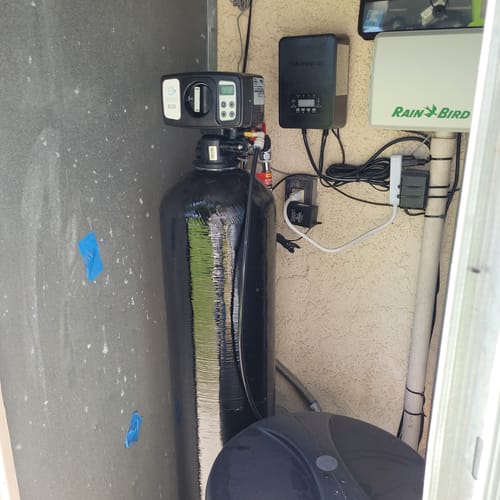
The main softener tank stood 54 inches tall with a 10-inch diameter, fitting perfectly in the utility room space I'd measured. The fiberglass construction felt substantial without being unnecessarily bulky. The digital control head looked more sophisticated than I expected, with a clear LCD display and intuitive button layout.
Inside the packaging, I found comprehensive documentation including installation manuals, programming guides, and warranty information. The materials were well-organized and clearly written, which gave me confidence in the manufacturer's attention to detail.
Component quality exceeded my expectations across the board:
The resin tank featured a one-piece construction with no seams or joints that could potentially fail over time. The fiberglass material resists corrosion and won't deteriorate like steel tanks might in humid environments.
The control valve assembly looked robust, with solid brass fittings and high-quality plastics. Moving parts felt smooth and precise, suggesting good manufacturing tolerances.
The brine tank included a safety float system to prevent overflow—a feature I appreciated as someone who's dealt with water damage before. The salt platform design keeps the salt supply elevated above any potential standing water.
All plumbing connections were clearly marked, and the included hardware appeared comprehensive. I counted every fitting against the parts list and found everything present and accounted for.
The bypass valve system impressed me with its robust construction. This component allows you to temporarily bypass the softener for maintenance or emergencies, and cheaper systems often skimp on this critical piece.
Installation Experience: Easier Than Expected

I considered hiring a professional installer but decided to tackle the job myself after reviewing the installation manual. The documentation was clear enough that I felt confident proceeding, plus I wanted to thoroughly understand my new system.
The installation location required some preparation. I needed access to the main water line, a 120V electrical outlet, and a drain for the discharge line. Fortunately, my utility room met all these requirements with minor modifications.
Cutting into the main water line felt intimidating initially, but the process went smoothly using a pipe cutter rather than a saw. Clean cuts are crucial for proper fitting connections, and taking time here pays dividends in leak prevention.
The SoftPro ECO's bypass valve design simplified the plumbing connections significantly. Instead of multiple fittings and potential leak points, the system uses a three-valve bypass that connects with standard 1-inch fittings. I used copper connections with proper flux and solder joints that tested leak-free under full pressure.
Programming the control head was straightforward once I understood the basic concepts. The system needs to know your water hardness level, household size, and preferred regeneration schedule. I programmed it for 18 grains per gallon hardness and set it to regenerate based on calculated water usage rather than a fixed timer.
The initial startup process walked me through several diagnostic checks to ensure everything was operating correctly. Water flowed through the system immediately, and I could hear the control valve cycling through its sequence properly.
Total installation time was approximately six hours, including preparation, plumbing, electrical connection, and initial programming. Most of that time involved careful measurement and planning rather than actual work.
One challenge I encountered was positioning the brine tank optimally. It needs to be close enough to the control head for the brine line connection, but positioned where you can easily add salt. I ended up relocating it twice before finding the perfect spot.
Feature Analysis: What Makes the SoftPro ECO Different
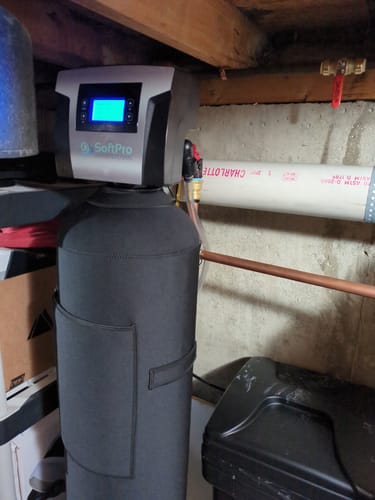
After six months of daily use, I've had ample opportunity to evaluate the SoftPro ECO's key features in real-world conditions. Several design elements set this system apart from basic water softeners and justify the investment.
Upflow Regeneration Technology
The most significant feature is the upflow regeneration system, which reverses the traditional flow direction during the cleaning cycle. Conventional softeners push brine solution downward through the resin bed, but the SoftPro ECO flows upward.
This design provides more thorough resin cleaning because it fluidizes the bed, allowing brine to contact every resin bead effectively. The result is 40% less salt consumption compared to downflow systems while achieving superior regeneration quality.
In practical terms, I'm using approximately 6 pounds of salt per regeneration cycle instead of the 8-10 pounds my neighbor uses with his conventional softener. Over a year, this efficiency saves both money and trips to the store carrying heavy salt bags.
Demand-Initiated Regeneration
Rather than regenerating on a fixed schedule regardless of water usage, the SoftPro ECO monitors actual consumption and initiates cleaning cycles only when needed. The system calculates remaining capacity based on water hardness and usage patterns.
This intelligence prevents unnecessary regeneration during periods of low water use, such as when we're traveling or during lighter usage days. It also ensures the system never runs out of capacity during peak demand periods.
During our vacation week last month, the system went eight days without regenerating because it accurately tracked our minimal water usage. A timer-based system would have wasted salt and water with unnecessary cycles.
Digital Control Head
The LCD display provides real-time information about system status, remaining capacity, and operational parameters. I can check exactly how much soft water capacity remains and when the next regeneration is scheduled.
Programming flexibility allows me to adjust regeneration timing to take advantage of off-peak water pressure hours. I've set it to regenerate at softprowatersystems.com 2 AM when we're not using water, ensuring full pressure is available for the cleaning cycle.
The control head also tracks operational statistics, including total gallons processed, number of regeneration cycles, and average daily usage. This data helps optimize settings and identify any unusual consumption patterns.
High-Capacity Resin System

The 64,000 grain capacity handles our family's water usage for 5-7 days between regenerations, depending on seasonal usage patterns. Summer months require more frequent cycles due to increased shower frequency and lawn watering.
The resin quality appears excellent based on consistent performance over six months. Water hardness tests show zero grains per gallon immediately after regeneration and minimal degradation just before the next cycle.
Resin bed depth provides excellent contact time, ensuring complete ion exchange even at higher flow rates. I've never noticed any hardness breakthrough during peak usage periods when multiple fixtures are running simultaneously.
Corrosion-Resistant Construction
The fiberglass tank construction eliminates corrosion concerns that plague steel tanks in humid environments. The material won't rust, scale, or deteriorate over decades of use.
Internal components use high-grade materials designed for water service. Valve bodies are machined rather than molded, providing precise tolerances and smooth operation.
The system's expected lifespan is 20 years with normal maintenance, making it a genuine long-term investment rather than an appliance requiring regular replacement.
Real-World Performance: Measurable Results That Matter
Testing water quality before and after installation provided objective data about the SoftPro ECO's effectiveness. I used both test strips and a digital TDS meter to track changes over time.
Pre-installation testing showed consistent readings:
Water hardness: 18 grains per gallon
Total dissolved solids: 340 ppm
Iron content: 0.3 ppm
pH level: 7.2
Post-installation results demonstrated dramatic improvement:
Water hardness: 0 grains per gallon (immediately after regeneration)
Total dissolved solids: 280 ppm (expected reduction from mineral removal)
Iron content: 0.1 ppm (modest reduction)
pH level: 7.4 (slight increase)
These numbers translate to noticeable improvements throughout the house. Soap consumption dropped significantly because soft water allows soap to lather properly rather than forming insoluble curds with hardness minerals.
Dishwasher performance improved dramatically. Glasses come out crystal clear without spots or film, and I've eliminated rinse aid completely. The machine's spray arms stay clean, and I no longer need monthly descaling treatments.
Laundry results exceeded my expectations. Clothes feel softer without fabric softener, colors remain vibrant longer, and white items stay bright. I've reduced detergent usage by approximately 30% while achieving better cleaning results.
Personal comfort improvements were immediate and sustained. My skin feels softer and less dry, particularly during winter months when indoor humidity drops. Hair appears shinier and more manageable, and I've reduced conditioner usage significantly.
Water heater efficiency appears to have improved based on energy usage monitoring. While hard to quantify precisely, my utility bills show modest decreases that likely reflect reduced mineral buildup on heating elements.
Scale prevention throughout the plumbing system is the most valuable long-term benefit. Fixtures stay cleaner longer, and I no longer see mineral buildup on faucet aerators or showerheads.
Performance consistency has been excellent over six months. I test water hardness monthly and consistently see zero grains per gallon, indicating complete mineral removal. The system hasn't experienced any breakthrough events or performance degradation.
Flow rate remains excellent even during peak usage periods. Multiple showers, dishwasher operation, and laundry can run simultaneously without pressure drops or hardness breakthrough.
Operating Costs and Long-Term Value Analysis
Understanding the true cost of water softener ownership requires analyzing both initial investment and ongoing operational expenses. After six months of detailed tracking, I can provide realistic cost projections.

Consumable Costs
Salt consumption averages 6 pounds per regeneration cycle, with cycles occurring every 5-7 days depending on usage. Monthly salt usage ranges from 25-35 pounds, costing approximately $8-12 using solar salt crystals.
Annual salt costs project to $100-140, significantly less than the $180-200 I calculated for conventional downflow systems. The upflow regeneration efficiency provides genuine savings that compound over years of operation.
Water consumption during regeneration averages 32 gallons per cycle. At my local water rate of $0.008 per gallon, this adds roughly $1.50 monthly or $18 annually to my utility bill.
Energy Consumption
The control head draws minimal electricity, primarily during regeneration cycles. I estimate annual electrical costs at less than $10 based on measured power consumption and local rates.
Potential water heater efficiency improvements may offset operational costs, though quantifying exact savings requires longer monitoring periods. Reduced mineral buildup should extend heating element life and maintain optimal heat transfer.
Maintenance Requirements
Routine maintenance involves keeping salt levels adequate and occasional control head cleaning. The system alerts me when salt is low, preventing hard water breakthrough from inadequate brine supply.
Annual professional service isn't necessary but could provide peace of mind. Local dealers charge $75-100 for comprehensive system checks and cleaning, though I'm comfortable performing basic maintenance myself.
The resin bed should last 15-20 years under normal conditions, eventually requiring replacement at a cost of $200-300. This major maintenance expense averages $10-20 annually when amortized over the resin's lifespan.
Comparative Value Analysis
Compared to no treatment, the financial benefits accumulate steadily:
Soap and detergent savings of $20-30 monthly from improved lathering efficiency
Reduced cleaning product needs saving $10-15 monthly
Extended appliance life preventing premature replacement costs
Lower maintenance costs for dishwashers, coffee makers, and other equipment
The system should pay for itself within 3-4 years through operational savings alone, not including the value of improved comfort and convenience.
Compared to other softener technologies, the SoftPro ECO's efficiency advantages provide ongoing value. Lower salt consumption, minimal water waste, and demand-based operation create meaningful cost differences over decades of ownership.
Who Should Consider the SoftPro ECO (And Who Shouldn't)
After extensive real-world testing, I have clear opinions about which situations favor the SoftPro ECO water softener and which might be better served by alternative approaches.
Ideal Candidates for the SoftPro ECO:
Households with moderate to severe hard water (10 grains per gallon) will see dramatic improvements that justify the investment. The system excels at handling challenging water conditions while maintaining efficiency.
Families prioritizing long-term value over initial costs will appreciate the robust construction and efficient operation. The 20 year expected lifespan makes it a genuine long-term investment rather than an appliance requiring regular replacement.
Environmentally conscious homeowners benefit from the reduced salt consumption and demand-based regeneration. The system minimizes waste while delivering superior performance.
DIY-capable homeowners can save installation costs and gain intimate knowledge of their system. The comprehensive documentation supports successful self-installation for those with basic plumbing skills.
Homes with existing utility room space and proper electrical/drainage access can accommodate the system without major infrastructure modifications.
Situations Where Alternatives Might Be Better:
Extremely tight budgets might be better served by basic timer-based systems, accepting lower efficiency in exchange for reduced initial costs. However, the long-term cost difference often favors quality systems like the SoftPro ECO.
Homes with space constraints might struggle to accommodate the 54-inch tank height. Compact alternatives exist but typically sacrifice capacity or efficiency.
Renters or short-term residents shouldn't invest in whole-house systems. Point-of-use solutions or negotiating with landlords might provide better options.
Areas with extremely high sodium restrictions in wastewater discharge might require salt-free alternatives, though these don't provide true water softening benefits.
Homes with complex water quality issues beyond hardness might need comprehensive treatment systems rather than standalone softeners. Professional water analysis helps identify the best approach.
Special Considerations:
Well water systems may require pre-filtration for iron, manganese, or sediment before softener installation. The SoftPro ECO handles modest iron levels but isn't designed for heavy contamination.
Households with members on sodium-restricted diets should consult healthcare providers about softened water consumption, though the sodium addition is typically minimal.
Geographic areas with harsh water conditions might benefit from the system's robust construction and efficient regeneration, while areas with borderline hard water might not see sufficient return on investment.
My recommendation is clear: if you have genuine hard water problems and want a long-term solution that balances performance with efficiency, the SoftPro ECO deserves serious consideration. The initial investment pays dividends through years of reliable operation and meaningful cost savings.